


The Psychology Behind Everyday Spending
Financial decisions are rarely driven by logic alone. Emotions, habits, and perceived value often shape how people spend, save, and manage their budgets. Many individuals struggle to maintain consistent financial discipline not because they lack income, but because spending decisions are frequently influenced by emotional triggers such as reward, comfort, or urgency.
- The Psychology Behind Everyday Spending
- Why Fibonacci Patterns Work for Financial Planning
- Applying Fibonacci Logic to Everyday Budgets
- Managing Spending in a Data-Driven Economy
- Connecting Financial Stability With Career Growth
- Technology and Financial Education
- Building Long-Term Financial Discipline
- Practical Steps for Applying Fibonacci Spending
- A New Perspective on Budgeting
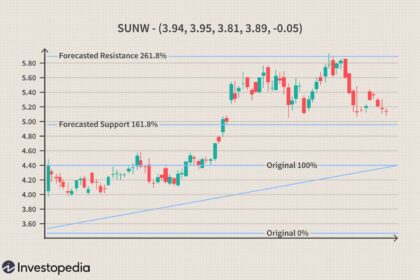
Understanding these behavioral patterns is essential before introducing structured financial strategies. How Fibonacci can improve spending habits and keep budgets on track begins with recognizing that people naturally respond to patterns and gradual change. When budgeting systems align with human psychology, they become easier to maintain over time.
Why Fibonacci Patterns Work for Financial Planning
The Fibonacci sequence appears repeatedly in nature, art, architecture, and design. Humans tend to perceive this pattern as balanced and harmonious. Applying this structure to financial planning creates a sense of order that reduces stress and decision fatigue.
Instead of rigid budgeting rules that can feel restrictive, Fibonacci-based spending introduces gradual adjustments that feel manageable. This approach mirrors the way people naturally scale decisions, making it easier to follow over time.
Recent finance industry updates highlight growing concerns around household debt and impulsive spending. As a result, financial frameworks that combine structure with flexibility are becoming increasingly valuable for maintaining healthy spending habits.
Applying Fibonacci Logic to Everyday Budgets
Using Fibonacci principles in budgeting encourages progressive financial discipline. Smaller expenses receive appropriate attention while larger purchases are evaluated more carefully in proportion to their impact.
Over time, this process trains individuals to pause before increasing spending beyond comfortable limits. Rather than seeing budgets as restrictive boundaries, individuals begin to view them as flexible systems that evolve with their financial situation.
The concept of how Fibonacci can improve spending habits and keep budgets on track becomes especially clear when financial planning shifts from rigid control toward structured awareness. This mindset helps reduce impulsive purchases and improves long-term financial consistency.
Modern technology insights also show that several digital budgeting platforms are beginning to incorporate pattern-based algorithms to help users manage spending more effectively. Fibonacci-inspired thinking fits naturally into these digital financial tools.
Managing Spending in a Data-Driven Economy
Today’s consumers face constant exposure to digital marketing, subscription models, and instant purchasing options. Insights from marketing trends analysis show that online environments increasingly encourage quick decisions rather than thoughtful financial planning.
A Fibonacci-based budgeting approach introduces intentional pauses in spending decisions. By encouraging proportional evaluation of purchases, it helps individuals resist impulsive buying behaviors.
Research in sales strategies and research also indicates that consumers who follow structured spending frameworks tend to experience fewer regretful purchases. Fibonacci-based budgeting encourages people to prioritize value rather than impulse, improving financial resilience during uncertain economic conditions.
Connecting Financial Stability With Career Growth
Financial wellbeing is closely connected to professional development and workplace stability. According to HR trends and insights, financial stress can significantly impact employee productivity, decision-making, and job satisfaction.
Individuals who maintain structured spending habits often experience greater mental clarity and confidence in their professional lives. Effective budgeting allows employees to focus on career growth, negotiate compensation more effectively, and invest in skill development opportunities.
In this way, understanding how Fibonacci can improve spending habits and keep budgets on track extends beyond personal finance and contributes to broader professional stability.
Technology and Financial Education
Digital financial tools are playing an increasingly important role in shaping spending behavior. Reports in IT industry news frequently highlight the rise of artificial intelligence-powered budgeting platforms and financial planning apps.
Fibonacci-based budgeting integrates well with these technologies because it provides a simple mathematical framework that can easily be translated into automated recommendations and spending alerts.
As financial education becomes more widely accessible, many individuals are exploring alternative budgeting systems that feel intuitive and sustainable. Fibonacci offers a structured yet approachable method that works for both beginners and experienced financial planners.
Building Long-Term Financial Discipline
One of the biggest challenges in budgeting is maintaining consistency. Traditional financial systems often fail because they require sudden and drastic changes in spending behavior.
Fibonacci-inspired budgeting allows individuals to adapt gradually. Instead of making extreme adjustments, spending patterns evolve over time while maintaining overall financial control.
This adaptability is especially valuable as income levels, career stages, and economic conditions change. Finance industry updates consistently emphasize the need for flexible financial strategies, and Fibonacci-based planning supports that adaptability while maintaining structure.
Practical Steps for Applying Fibonacci Spending
Individuals interested in applying Fibonacci principles to budgeting can begin by observing current spending patterns. Identifying areas where proportional adjustments feel manageable is often the first step.
Over time, this awareness encourages more intentional financial decisions. As spending discipline improves, individuals often find that they naturally create additional savings without feeling deprived.
Combining Fibonacci budgeting with modern financial tools and ongoing financial education can transform it from a simple concept into a powerful long-term financial strategy.


A New Perspective on Budgeting
Understanding how Fibonacci can improve spending habits and keep budgets on track introduces a fresh perspective on personal finance. By blending behavioral psychology with structured numerical patterns, this approach creates a budgeting system that feels both logical and sustainable.
When supported by modern financial tools and informed by current economic insights, Fibonacci-based budgeting helps individuals build lasting financial discipline while maintaining flexibility.
Ittrendswire delivers expert perspectives on technology insights, finance industry updates, HR trends and insights, marketing trends analysis, IT industry news, and sales strategies and research to help professionals make smarter financial and business decisions.
Connect with Ittrendswire to explore forward-thinking insights that support smarter money management and long-term financial success.